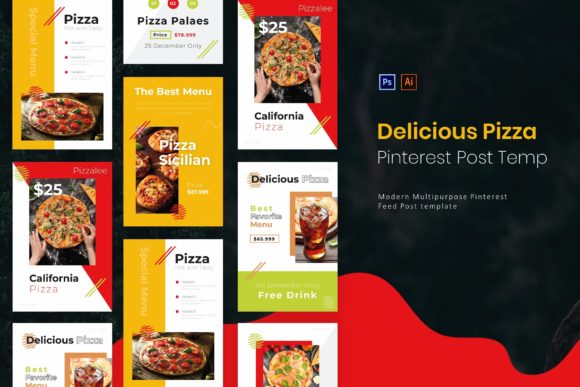
Delicious Pizza Pinterest Post Templat: A Strategic Tool for Intentional Branding and Content Planning
When you build a presence on Pinterest, the difference between a post that performs and one that disappears often comes down to presentation. Visual consistency, clear messaging, and a layout that respects the platform's format are not optional—they are foundational. The Delicious Pizza Pinterest Post Templat offers a structured starting point for anyone who wants to create pins that look intentional, not improvised. This article explores what this template is, why it matters strategically, and how to use it with purpose rather than as a quick fix.
Why a Pinterest Post Template Matters for Your Goals
Pinterest operates differently from other social platforms. Users come to discover ideas, plan projects, and save content they intend to revisit. A well-designed pin must communicate value in less than two seconds and remain legible across devices. The Delicious Pizza Pinterest Post Templat provides a pre-built canvas—735 by 1102 pixels—that aligns with Pinterest's recommended aspect ratio. This alone saves time, but the real value lies in how the template supports your broader goals.
If you are a small business owner, a food blogger, a marketer, or a creator, every pin you publish contributes to your brand's visual language. Using a template like this one helps you maintain a consistent look across your profile. Consistency builds recognition. Recognition builds trust. And trust is what converts a casual scroller into a follower or a customer.
Strategic use of this template means you are not starting from a blank canvas each time. Instead, you are making small, deliberate decisions—choosing a photo, adjusting text, selecting colors—within a framework that already works. This is not about cutting corners. It is about focusing your energy on what actually moves the needle: the content itself, the message, and the call to action.
What the Delicious Pizza Pinterest Post Templat Includes
Before you decide whether this template fits your workflow, it helps to understand what you are getting. The package includes five pages, available in both AI and PSD file formats. Each page is fully layered and well organized, meaning you can isolate individual elements without breaking the design. Text, shapes, and colors are fully editable, and the free fonts used are clearly specified in the included readme help file.
This level of structure is particularly useful if you work with a team or plan to create multiple pins over time. You can hand the template to a designer, a virtual assistant, or a junior team member and trust that the output will remain on-brand. The readme file reduces the learning curve, so you spend less time troubleshooting and more time publishing.
The dimensions—735 by 1102 pixels—are not arbitrary. This vertical format dominates Pinterest's feed and carries more visual weight than square or landscape alternatives. By starting with these dimensions, you are already optimizing for the platform's natural behavior.
Strategic Use Cases: When and How to Apply This Template
A template is only as useful as the context in which you apply it. The Delicious Pizza Pinterest Post Templat is not a magic solution, but it can serve several strategic purposes when used thoughtfully.
Brand Consistency Across a Series of Pins
If you are launching a recipe series, promoting a menu, or building a collection of how-to guides, using the same template across multiple pins creates a visual thread. Your audience will begin to recognize your content before they read the text. This is especially valuable for food-related businesses, where the image does most of the work. By keeping the layout consistent, you let the photography shine while still reinforcing your brand identity.
Speed and Efficiency for Content Calendars
Planning a month of Pinterest content requires discipline. Without a template, each pin demands a fresh design decision. With the Delicious Pizza Pinterest Post Templat, you can batch-create multiple pins in a single session. Change the photo, update the headline, adjust the color to match the dish, and export. This workflow is ideal for freelancers, bloggers, and small teams who need to maintain a steady publishing cadence without hiring a full-time designer.
Testing and Iteration Without Redesigning
One underappreciated advantage of using a structured template is the ability to test variations. You can create two versions of the same pin—changing only the headline or the accent color—and compare performance. Because the template is fully editable, you can iterate quickly without rebuilding the entire file. Over time, this data-driven approach helps you understand what your specific audience responds to.
Thoughtful Customization: Making the Template Your Own
The template is minimalistic and modern by design, but that does not mean you should leave it untouched. The goal is not to use it as-is forever. The goal is to adapt it so it feels like yours.
Start with your brand colors. The template uses neutral and warm tones that work well for food content, but you should adjust the shapes and text colors to match your existing visual identity. If your brand uses a specific green or a particular shade of red, apply it here. The editable layers make this straightforward.
Typography is another area where small changes have outsized impact. The free fonts included are clean and readable, but you may want to swap them for your brand fonts if you have them. Keep readability as your priority. Pinterest users often view pins on mobile devices, and small or overly decorative text will hurt engagement.
Photography matters most. The Delicious Pizza Pinterest Post Templat is designed to frame an image prominently. Invest time in selecting high-quality, well-lit photos that show the food in an authentic way. The template can elevate a good photo, but it cannot rescue a poor one.
Risks of Using a Template Without Clear Intent
No tool is risk-free, and templates are often misused. The most common mistake is treating the template as a shortcut rather than a framework. If you publish pins that look similar to everyone else using the same template, your content will blend in rather than stand out. The template is a starting point, not a finished product.
Another risk is neglecting the strategic layer beneath the design. A beautiful pin with a weak headline, no call to action, or an unclear offer will not perform well regardless of how polished it looks. The Delicious Pizza Pinterest Post Templat handles the visual structure, but you must handle the messaging. Ask yourself: What do you want someone to do after seeing this pin? Save it? Click through to a recipe? Visit your online store? Every design decision should support that goal.
There is also the risk of over-reliance. If every pin you publish uses the exact same layout, your profile may start to feel repetitive. The template includes five pages, which gives you some variation. Use them. Alternate between layouts, experiment with different text placements, and keep your feed feeling fresh while still staying coherent.
Practical Planning Tips for Better Results
To use the Delicious Pizza Pinterest Post Templat intentionally, integrate it into a broader content planning process. Here are a few approaches that practitioners find helpful.
- Map your content themes first. Before you open the template, list the topics or recipes you want to promote over the next month. This ensures the template serves your content, not the other way around.
- Create a style guide for yourself. Decide which fonts, colors, and photo styles you will use consistently. Write it down. Refer to it each time you create a new pin.
- Batch your production. Set aside two hours to create a week's worth of pins. Open the template, duplicate the file, and work through each one systematically. This reduces decision fatigue and improves output quality.
- Test one variable at a time. If you want to improve click-through rates, change only the headline or the button text in one pin while keeping everything else identical. Compare results and learn from the data.
Long-Term Value: Beyond the First Pin
The true value of a template like this one is not in the first pin you create. It is in the system it enables. When you have a repeatable process for producing high-quality, on-brand Pinterest posts, you free up mental energy for higher-level decisions—content strategy, audience research, partnership development, and business growth.
Over time, your Pinterest profile becomes a library of consistent, recognizable content. New visitors can quickly understand what you offer and whether it aligns with their interests. This is the kind of long-term asset that compounds. The Delicious Pizza Pinterest Post Templat is a tool that helps you build that asset efficiently.
For entrepreneurs, marketers, and creators who manage multiple channels, this efficiency is not a luxury. It is a necessity. The less time you spend reinventing the layout for every single pin, the more time you can invest in creating the valuable content that your audience actually wants.
Final Considerations Before You Begin
Before you download and open the template, take a moment to clarify your goals. Are you trying to increase traffic to a specific recipe? Build brand awareness for a new product? Grow your Pinterest following from scratch? The same template can serve all of these objectives, but the way you customize it will differ.
If you are driving traffic, make sure your headline includes a clear benefit and your call to action tells the user exactly what to expect when they click. If you are building brand awareness, prioritize visual consistency and include your logo or brand name in a visible but unobtrusive location.
The Delicious Pizza Pinterest Post Templat is a practical, well-structured resource—but it is not a strategy. It becomes valuable only when placed in the hands of someone who knows what they want to achieve and how to measure success. Use it as a tool, not a crutch. Customize it thoughtfully. Test your assumptions. And let the quality of your content, not just the quality of your design, carry the weight.
When you approach any template with clear intent, you avoid the trap of generic content. You build a presence that feels deliberate, professional, and trustworthy. And on a platform where users are always planning their next meal, project, or purchase, that trust is everything.